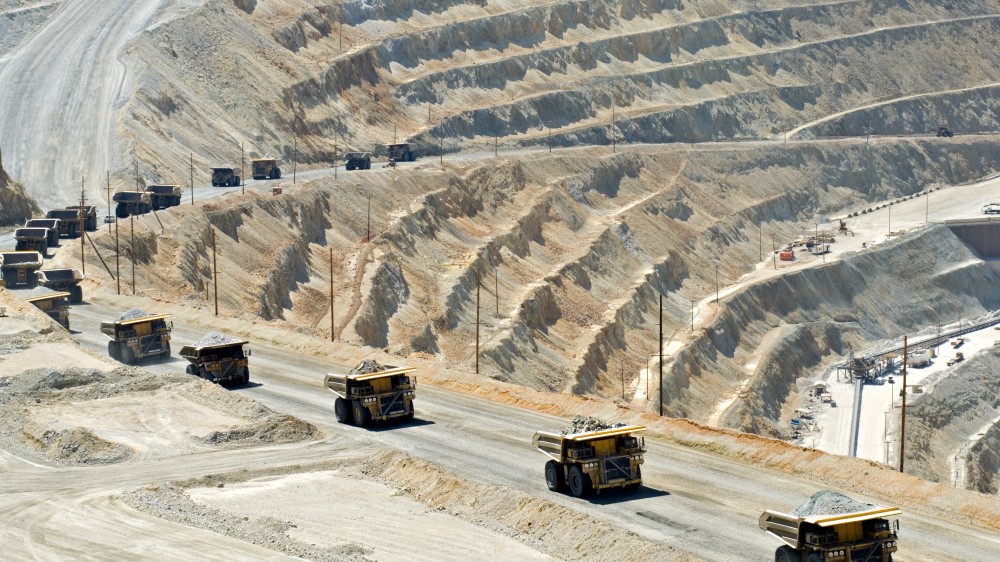
There is an opinion: "whoever owns rare earth metals will own the whole world." And Kazakhstan, according to various estimates, is among the countries with the largest reserves of rare earths. To what extent this information corresponds to reality and whether rare earths can become a "new oil" for us, the correspondent Tengrinews.
How many rare earth deposits are there in the country
According to the Ministry of Industry and Construction, there are currently 15 deposits of rare earth metals in Kazakhstan, 11 of which are in subsurface use, including Cretaceous, Tomak, Taybogar, Tasmuryn, Kundybai, Akbulakskoye, Jamchi, Moinkum, Inkai, Akdala, Kanzhugan, Mynkuduk and Budenovskoye.
"However, in uranium deposits, which make up the bulk of reserves, associated components are usually not extracted, since the technology and economics of development are determined by the main component," the agency said in response to an official request from the editorial staff.https://tengrinews.kz /">Tengrinews.kz .
Who produces rare earths
According to the information of the Ministry of Industry, the following companies are operating at the above-mentioned fields: JSC Kundybai Mining, JSC Araltuz, JV Katko LLP, JSC NAC Kazatomprom, Appak LLP, Karatau LLP, Sareco LLP.
It is also reported that this year, as part of the state geological survey of the subsurface, exploration work continues at 12 sites promising for rare and rare earth metals.
"Work began in 2022, and 11 facilities are scheduled to be completed this year and one (started in 2023) in 2025. Information about the results will be generated upon completion of these works at the end of this year. Also this year, work has begun on the predictive assessment of granitoids of East Kazakhstan's collision zones for rare metal and rare earth mineralization and the study of the territory of Central Kalba to identify areas promising for lithium production and rare metal and rare earth mineralization of the Kalba-Narym zone," the ministry said.
The ministry also reported that as part of the Comprehensive Plan for the Development of the Rare and Rare Earth Metals Industry for 2024-2028, it is planned to analyze the potential within the Bayankol area, the Aral and Caspian regions to search for lithium in mineralized brines, lakes and salt marshes.
Abdurasul Zharmenov, Director General of the National Center for Integrated Processing of Mineral Raw Materials, Professor, Academician of the National Academy of Sciences (NAS), told some details about rare earths in Kazakhstan.
"There is no production of rare earths in Kazakhstan today. It used to be: the Irtysh Chemical and Metallurgical Plant worked in Ust-Kamenogorsk, which was quite secret in Soviet times, where these 14 elements were separated from each other. It was a very complex production, but we had no other production of rare earths. Today, neither one nor the other production is working, it is closed," Zharmenov said.
He also explained why this situation has developed.
"Because at this plant, the raw materials for separation during the processing of phosphorite ores were obtained from Russia, from the Kola Peninsula. Along the way, this concentrate of rare earth elements was obtained and sent to Kazakhstan for separation. Since Russia is no longer shipping, there are no developed deposits of rare earth elements in Kazakhstan today. Rare earth elements are present in ores, but it is not being developed today," said the Director general of the national center.
According to Abdurasul Zharmenov, there are prospects for the development of this industry in Kazakhstan. However, the quality of our rare earth ores, as it turned out, leaves much to be desired.
"For comparison, China has 90 percent of these rare earth metals and produces them today. It is important to note why these rare earth ores are not being developed in Kazakhstan.: they are 10 times worse in quality than Chinese ones. That is, the ore itself is poor, and it is not two or three percent poorer, but almost 10 times poorer. Although they were discovered 70 years ago, we do not have economically feasible technologies for their processing today. I can say that we now have a technology that helps our ore become competitive along with Chinese ores. However, this has not been announced yet," Zharmenov said.
Which regions are rich in rare earth metals
"Kostanay and Kyzylorda regions. I'm not naming Zhambyl yet, because it's even poorer. But these two areas can be considered objects of production. Moreover, the Kyzylorda region is more ready, because some production facilities have already been created there for these purposes," said the academician of the National Academy of Sciences.
According to him, these fields have been operating for several years, but there are certain problems with the technologies that make this process cost-effective.
"We have adopted these technologies, but so far we have not even disclosed them to the production staff. When we agree on the conditions under which we will work with them, we will probably name them and distribute them," Abdurasul Zharmenov added.
Who owns rare earth deposits
"As far as I know, some fields in the Kyzylorda region are owned by British companies. And the Kostanay fields were mostly owned by our Kazakh oligarchs, but they were unable to process the raw materials due to the lack of technology. They also worked with us at one time, but, to be honest, we couldn't create a payback technology. It is only in the last year that we have successfully introduced fundamentally new technologies. And today we can offer them to the owners of the fields," Zharmenov said.
How much money is needed to extract rare earth
As the interlocutor explained Tengrinews.kz , the main investments are needed for the extraction of rare earths. The process itself is not much different from mining copper or gold.
"In general, metallurgy is a capital–intensive industry. You can't do this for 20-30 million investments. We need funds from 100 million to 1 billion dollars. But this is not the difference between rare earth metals, these are any metallurgical deposits. Because mining sometimes has to be carried out at depth, sometimes by the mining method, and these are all capital expenditures. In principle, there is no need for mines to extract our rare earth metals, we will have open-pit mining both there and here. Therefore, much less money is needed, these ores are quite close to the surface," Zharmenov explained.
Speaking about investors, he said that Canadian companies had previously shown great interest in the fields, but they owned the same fields in China.
"We didn't work together because we didn't come up with competitive technologies. It was about 10 years ago, and they went to China against this background. Now, with the new technology, we may be able to access them again. We are ready to negotiate with investors. But first we need to contact our government agencies to understand who is the owner of the deposits and start negotiations with them. Today we don't even have this information," Zharmenov promised.
Stocks and prospects
"Most likely, we will never be the largest suppliers of rare earth metals. Because we have quite a few reserves. Plus, the ore quality is only good technology that will allow us to compete with foreign companies with our rare earth metals," said the general director of the national center.
Zharmenov is optimistic about the prospects for the development of this industry. At the same time, he talks about certain limits.
"At least it can become a large enough niche for us. We may not be comparable to China in terms of production, but nevertheless it can be quite a significant increase for our economy. But on a global scale, of course, we will not be major suppliers," he said.
He also believes that the extraction of rare earths will not remain an urgent topic for long.
"Because materials are changing: at one time, the same rare earth metals were in price in Europe, today gadolinium. Science does not stand still, there are substitutes. They are now trying to replace lithium with sodium by billions of tons. If some element creates a monopoly, science will surely find other material that can replace it. Therefore, no one will allow the owners of rare earth deposits to "own the world," said Abdurasul Zharmenov.
Permission for foreigners to extract rare earths: how to protect the interests of the country
Our interlocutor believes that in order to protect Kazakhstan's interests, first of all, it is necessary to impose a ban on the export of concentrates and the refinement of our ores to final products.
"The first conversion is the production of concentrate, the second conversion is the production of metal. And if we establish such relationships with investors that they will do the fifth and sixth redevelopments in Kazakhstan, then this is the most basic, the greatest protection for our economy," he stressed.
In order to do this, amendments to the legislation and the corresponding position of our government agencies in negotiations with foreign investors will be required.
The specialty of a geologist is becoming different
Given the variety of fossils that nature has endowed our country with, Zharmenov is confident that the profession of a geologist will always be relevant. But it will become a little different.
Other news
ПРОТОКОЛ заседания конкурсной комиссии

День металлурга в Национальном Центре по комплексной переработке минерального сырья Республики Казахстан
Materials on the submission for the assignment of the academic title of associate professor: Alimzhanova A.M.
Казахстанские ученые представили разработки в области полупроводниковых материалов на международной конференции RCCT-2026