Currently, Kazakhstan is seeking its place among the economically developed countries of the world. One of Kazakhstan's areas of specialization is the mining and metallurgical industry. The current state of the MMC of the Republic of Kazakhstan is quite tense, with many enterprises on the verge of economic and technological collapse.
The reserves of rich ores have been almost exhausted. It has become necessary to involve in processing ores with low content of valuable components, the so-called off-balance raw materials, for which enterprises do not have technological schemes. Off-balance raw materials are extremely complex: chemically bound alumina with skeletal amorphous silica form microdispersions with organic matter that are not amenable to mechanical or flotation enrichment of selective or collective concentrates, nor to direct acid leaching due to the enormous consumption of reagents.
The content of non-ferrous (copper, zinc, lead), refractory (titanium, zirconium, vanadium, niobium, tantalum, molybdenum, tungsten), precious (gold, silver, platinum group metals), radioactive (uranium, thorium, actinium) metals, and heavy lanthanide group elements (yttrium, scandium), as a rule, does not exceed 1% in total in the initial raw materials. Their mineral formations are evenly distributed throughout the clay-siliceous-carbonate matrix together with organic matter. Profitable processing is possible only through fundamentally new methods of extraction with comprehensive recovery of all valuable components. The RSE "NC CPMI RK" has developed a universally applicable technology, proven in pilot-industrial conditions, that allows complex, profitable, and efficient processing of most deposits of rare and rare-earth metals. The technological scheme incorporates a new approach that eliminates classical enrichment based on primary (non-ferrous, rare, and rare-earth) metals.
The technology is based on the mechanical separation of "skeletal" amorphous silica from chemically bound silica, separation of metals by groups through the properties of double salts, and the use of combined schemes that ensure comprehensive extraction of valuable components.
The products of the prospective production complex will include more than ten types of goods: REM concentrate, oxides of yttrium, scandium, vanadium, molybdenum, uranium, flux for the production of ferrosilicon and ferrosilicoaluminum, silicon oxide for catalyst and solar-grade silicon production, nanocarbon sorbent, alumina for aluminum production, and potassium fertilizers.
Kazakhstan's competitive advantage in the global market of non-ferrous, rare, and rare-earth metals lies in its own raw material base, successful industrial experience, modern economically viable technologies, and qualified specialists.
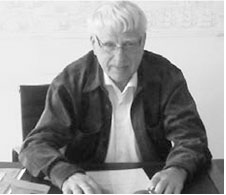
Kozlov V.A.
Head of the Laboratory of Titanium and Vanadium
RSE "NC CPMI RK", Doctor of Technical Sciences, Professor
Other news
ПРОТОКОЛ заседания конкурсной комиссии
День металлурга в Национальном Центре по комплексной переработке минерального сырья Республики Казахстан
Materials on the submission for the assignment of the academic title of associate professor: Alimzhanova A.M.
Казахстанские ученые представили разработки в области полупроводниковых материалов на международной конференции RCCT-2026