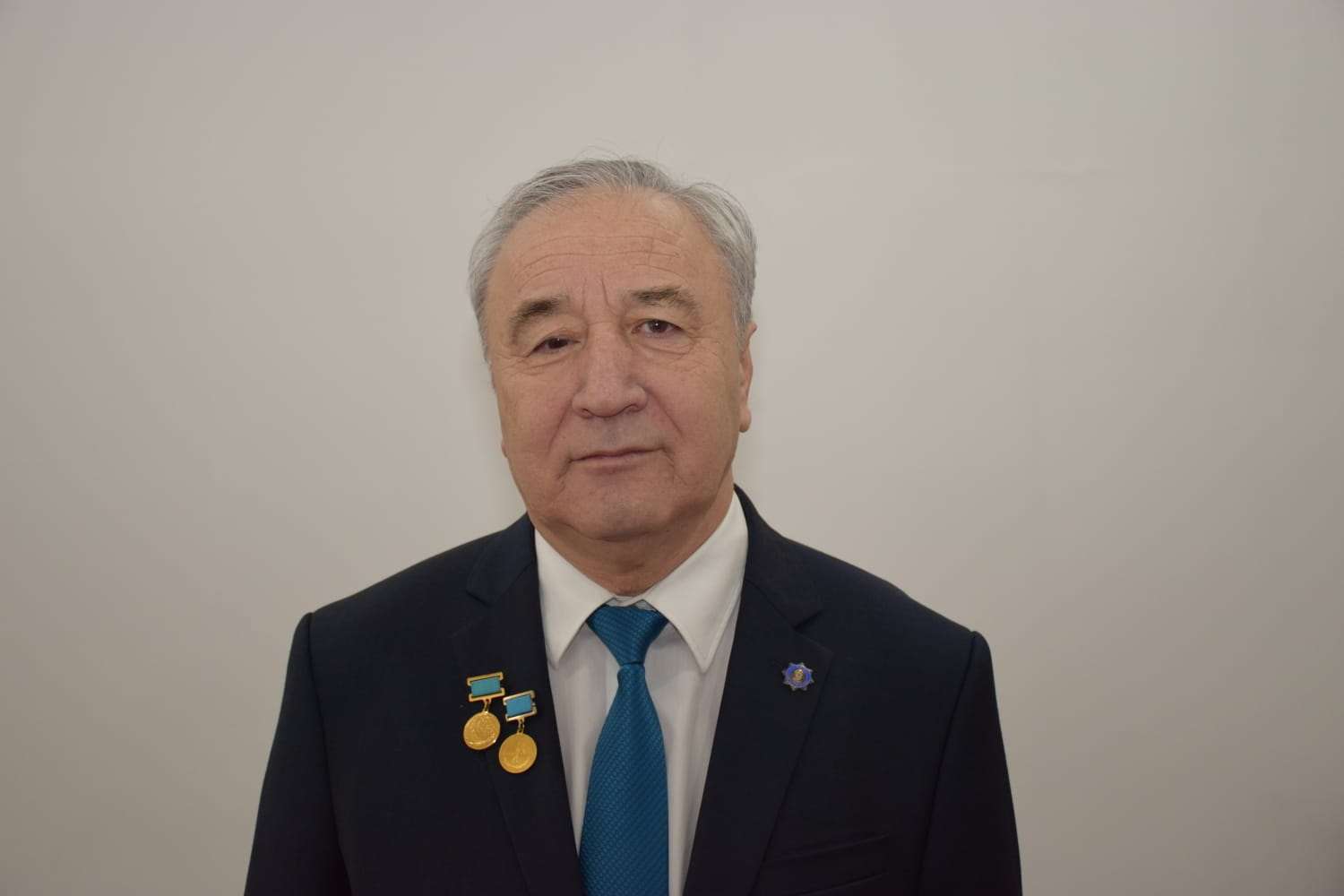
Abdurasul Zharmenov, General Director of the RSE "National Center for Integrated Processing of Mineral Raw Materials", twice winner of the State Prize, academician
For almost a year, the scientific community, under the auspices of the Ministry of Science and Higher Education, participated in the development of the draft law "On Science and Technology Policy"
The document has now been approved and has become law. His principal novel was the introduction of the concept of "scientific and technological policy" as part of the state technological policy.
If technological policy is understood as interaction in the "government – industry – science" system, then we, as a scientific organization in the field of mineral processing, which has sufficient experience in working with both government and business structures of the mining and metallurgical profile, welcome the adoption of the law.
The observed positive changes in science and the country as a whole, which led to the adoption of the law, demonstrate an understanding of the need for a scientifically sound approach to state regulation of subsurface use processes. Now it's up to the urgent execution of the document within the framework of a properly developed technological policy for the country's economy.
The National Center for Integrated Processing of Mineral Raw Materials of the Republic of Kazakhstan (hereinafter referred to as the Center) was established in 1993. The association of academic and branch scientific organizations covering all areas and divisions of the mining and metallurgical industry began to produce results quickly. We managed to overcome the so-called "shelf work". It is now considered in certain circles to be the main drawback of Soviet science, although it is a "shelf" – science should always have the opportunity to work. Otherwise, industry science risks becoming a factory laboratory. In parallel with scientific research, the Center was quite intensively engaged in the implementation of the results obtained at existing industrial enterprises, as well as through the creation of large and small innovative industries. Over the years, the Center has built mining and processing plants, metallurgical plants, heap leaching plants, gold recovery plants, dore alloy plants and refining plants both in Kazakhstan and abroad (Russia, Uzbekistan, China, Italy, Canada and other countries). Annual production of metal products in these (mainly foreign) markets. – Editor's note.) enterprises are estimated at 4-4.5 billion dollars. By the way, this is a worthy result for any scientific organization in the world. The Center has developed hundreds of technologies, including unconditional world-class innovations. These technologies open up the prospect of creating high-quality steel products in Kazakhstan, smelting and rolling high-strength steel of the X80 strength category with unique performance properties that meet the specifications of the API Spec 5L standard for oil and gas pipes. By the way, the import of these pipes to Kazakhstan in some years reaches 3 billion dollars in monetary terms.Thanks to the technologies of the RSE "NCCMS RK", the volumes of gold and copper production have been increased, new generation refractory materials have been created, which are being purchased by Qarmet, Kazakhmys, Kazzinc, and the Eurasian Group. And this is only a part of our work, for which the scientists of the Center were awarded eight state prizes of the republic in the field of science and technology. What impact these innovative developments will have on the economy of our country largely depends on the technological policy of the state.
As a person who has been involved in the development and industrial development of technologies all his adult life, I support additional measures of state support for scientific organizations and scientists provided for by the new law. At the same time, I would like to warn the EOM of the Republic of Kazakhstan against persistent appeals to industrial flagships with proposals to provide them with a list of problems that will then be solved at the expense of budgetary funds allocated to science...
It looks as if the government plans to take responsibility for solving the problems of private business by financing science, which in turn will be forced to transfer technologies developed by scientists to industrial companies for free.
Meanwhile, it should be recalled that industrial enterprises are already solving their current production problems within the framework of contracts concluded with scientific organizations.
For example, our National Center for Integrated Processing of Mineral Raw Materials of the Republic of Kazakhstan annually concludes contracts with industrialists with a total value of several billion tenge. Potentially, this volume could be much higher – the lack of modern capacities, insufficiently developed infrastructure, and outdated equipment do not allow it.
We are working independently towards modernization, but we cannot do a drastic upgrade. I am sure that universities and other research institutes in the republic are experiencing similar difficulties. And if the government allocates funds to solve such tasks as upgrading buildings and equipment, increasing the level of provision of modern scientific instruments, and increasing salaries for scientists, then domestic science will become more attractive to businesses and, obviously, will increase the volume of orders executed in order to ensure a more tangible return for the country.
I will not take the liberty to judge other areas, for example, medicine, where, I believe, there are a lot of issues that require special attention, but I can clearly identify the primary government tasks in the field of subsoil use.
According to the Constitution of the New Kazakhstan, the subsoil belongs to the people, which means that the responsibility for state regulation in this area should be particularly high. First of all, it is necessary to stop the predatory exploitation of deposits. This practice has led to the rapid depletion of many of them. Therefore, first of all, it is necessary to determine the extraction rates of the target component in the extracted raw materials. When mining deposits, non-target, but no less valuable related elements, as a rule, rare and precious metals, remain undiscovered. Extraction standards should also be defined for them. Such work should be carried out within the framework of state scientific programs for each specific deposit and all man-made waste, the interest in which has increased very sharply recently.
The implementation of such programs will make it possible to provide authorized government agencies with the necessary scientifically proven recommendations for sound government regulation of subsurface use processes. This will significantly and permanently increase the state's revenues from subsurface use.
Thus, Kazakh science will make its worthy contribution to the economic development of the republic, which will generally contribute to the technological development and re-equipment of the industry. Our deep knowledge of Kazakhstan's mineral resources allows us to propose effective ways to use them. At the moment, we have developed technologies for processing many ores and wastes that have not yet been involved in economic turnover precisely because of the lack of technology. These are ores from the well-known deposits of Zhairem, Shalkiya, Kundybai, Lisakovskoye, numerous ferromanganese, oxidized nickel ores, metallurgical slags, cakes, and others. We can also mention our efforts in creating production facilities, including the processing of recycled raw materials (rice husks, electronic scrap, in particular, SIM and smart cards, which are planned to be supplied to us from abroad) to produce unique new products, including rare metals and their compounds, silicon oxide of a special structure, and others.. The Center is successfully engaged in the revival of the tungsten industry in Kazakhstan. We have signed a memorandum of cooperation with foreign corporations in the field of developing deposits of hard-to-enrich tungsten ores and organizing the production of high-grade products.It should be noted that Kazakhstan also needs a vital program for the disposal of waste gases generated during coal combustion. This must be done immediately in order to solve the problem of the environmentally friendly use of coal in the energy and metallurgy industries as soon as possible.
Kazakhstan, having coal reserves for 250 years and using their powerful energy and mining and metallurgical potential, cannot switch to carbon-free technologies in the near future without major losses for the economy. Here, as they say, the rescue of drowning people is the work of drowning people themselves, especially since the Center and its branches, other Kazakhstani institutes of chemical profile and catalysis already have encouraging results. And the allocation of funds by the state to address these issues seems unconditionally justified.
Source: kazpravda.kz
Other news
ПРОТОКОЛ заседания конкурсной комиссии

День металлурга в Национальном Центре по комплексной переработке минерального сырья Республики Казахстан
Materials on the submission for the assignment of the academic title of associate professor: Alimzhanova A.M.
Казахстанские ученые представили разработки в области полупроводниковых материалов на международной конференции RCCT-2026