
As you know, it is impossible to move to an innovative economy overnight. This is also shown by Kazakhstan's strategy aimed at an innovative way of economic development, which began in 2008. According to Shebnem Akkaya, Permanent Representative of the World Bank in Kazakhstan, there is no specific model of innovative development in the world – each country must find its own "own model".
Indeed, the Government of the Republic of Kazakhstan has done a lot in this area of the economy so far, in comparison with the countries of the "post-Soviet period".
On the instructions of the Head of State, State programs for economic development have been adopted, Programs for accelerated industrial and innovative development of the country have been developed, Business Roadmaps have been created, appropriate financial development institutions have been created, support measures have been developed for the commercialization of ideas, technologies and other solutions in high demand by business, innovative projects through grant financing through the structures of the Ministry of Finance of the Republic of Kazakhstan - JSC National Agency for Technological Development" and the Ministry of Education and Science of the Republic of Kazakhstan - the Technology Commercialization Center LLP.
In turn, in order to activate the processes of technology commercialization in almost all universities and research institutes, NATR JSC has established Technology Commercialization Offices, which are designed to provide advisory assistance to scientists and innovators in preparing and submitting tender documents for financing through various grants.
At the same time, despite the large range of conditions provided by state institutions for the active involvement of the educated part of the population in innovation processes, especially students, scientists and innovators in introducing creative ideas, unique technologies and non-standard solutions into economic turnover, the activity of the population in terms of mass participation in innovative development processes remains at an inadequately low level. requirements for the volume of services provided.
In my opinion, this is affected by the lack of a stratum of "science managers", people who know how to link the results of science with production, the business environment, and who know how to see a marketing niche in the product market. Of course, compared to retail, this is a long process with technical, technological, market, and even political risks.
In this regard, development institutes in their training seminars and trainings need to pay special attention to the training of specialists with skills in creating new small enterprises, pilot-industrial enterprises, pilot-test facilities, introducing new technologies, in the ability to find new business entities of their niche or market share, risk managers etc.
Employee
Office of Commercialization
RSE "NC KPMS RK"
Sarsebaev B.A.
Other news
ПРОТОКОЛ заседания конкурсной комиссии

День металлурга в Национальном Центре по комплексной переработке минерального сырья Республики Казахстан
Materials on the submission for the assignment of the academic title of associate professor: Alimzhanova A.M.
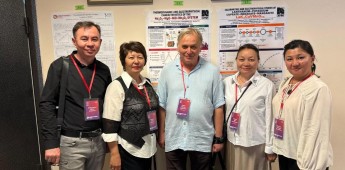
Казахстанские ученые представили разработки в области полупроводниковых материалов на международной конференции RCCT-2026