
Revolutionary stuff
A production facility for the production of silicon–carbon nanocomposite, a unique material obtained from rice husks, will open in Almaty this fall. Yuri Sukharnikov, the project manager and Chief Researcher at the National Center for Integrated Processing of Mineral Raw Materials of the Republic of Kazakhstan, Professor of Metallurgy, told his own correspondent of Kazakhstanskaya Pravda about this.
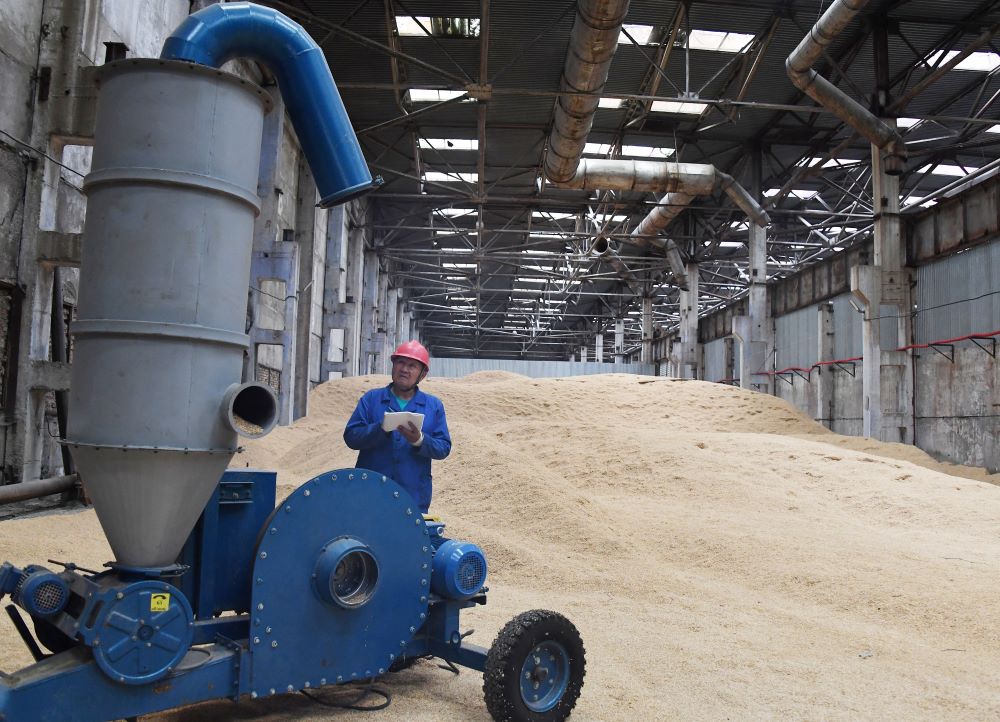
According to the scientist, over 150 million tons of rice husks are produced annually in the world, including up to 90 thousand tons in Kazakhstan. The lion's share of this industrial waste is exported to landfills and thrown into fields. As a result, the environment becomes polluted.
– Meanwhile, rice husks contain up to 15 percent silica, or silica. It does not rot, it decomposes very slowly," explains the Doctor of Technical Sciences. – We have developed a project for the industrial production of silica carbon from these raw materials. By the end of the year, we plan to release the first commercial batch of products in high demand worldwide. In particular, this material can be used in poultry farming and in the production of rubber products.
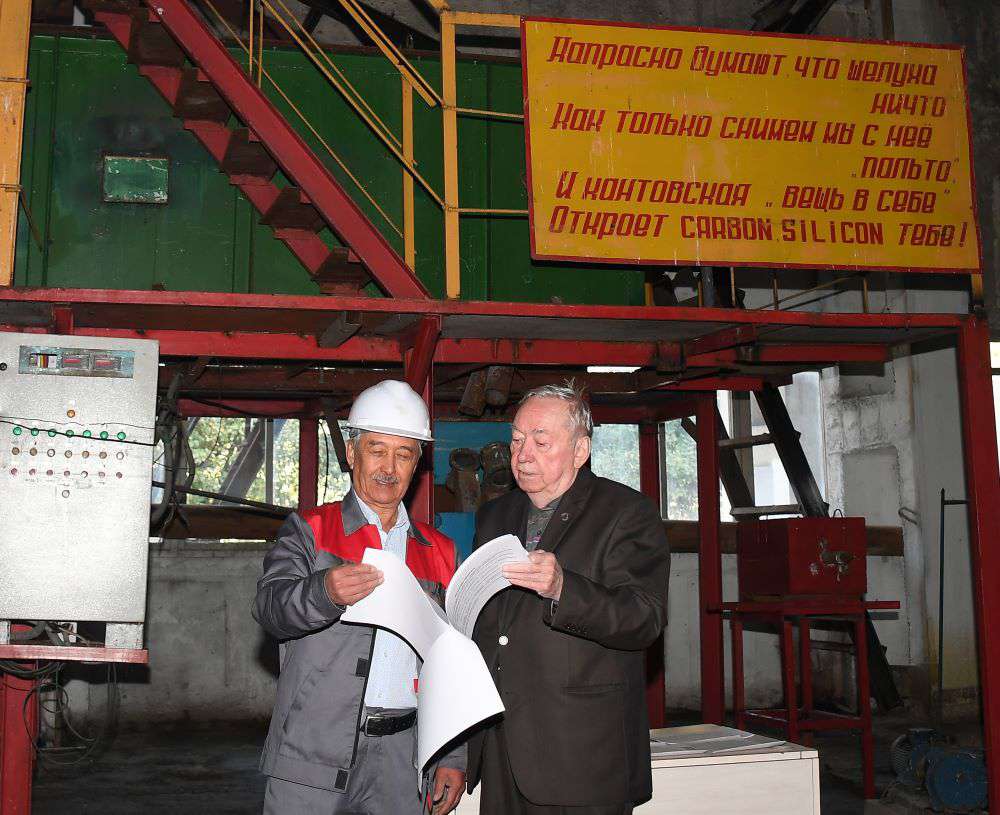
The laboratory of silicon carbon composites operates at the Center for complex processing of mineral raw materials. We took a tour of the production base, where our guides were Sanzhar Dzhusupov, head of the silicon carbon production, Candidate of Technical Sciences, Rakhmatulla Tashimbetov, lead designer, Sergey Ermishin, lead engineer, and Sanzhar Dyuskaliev, chief power engineer.
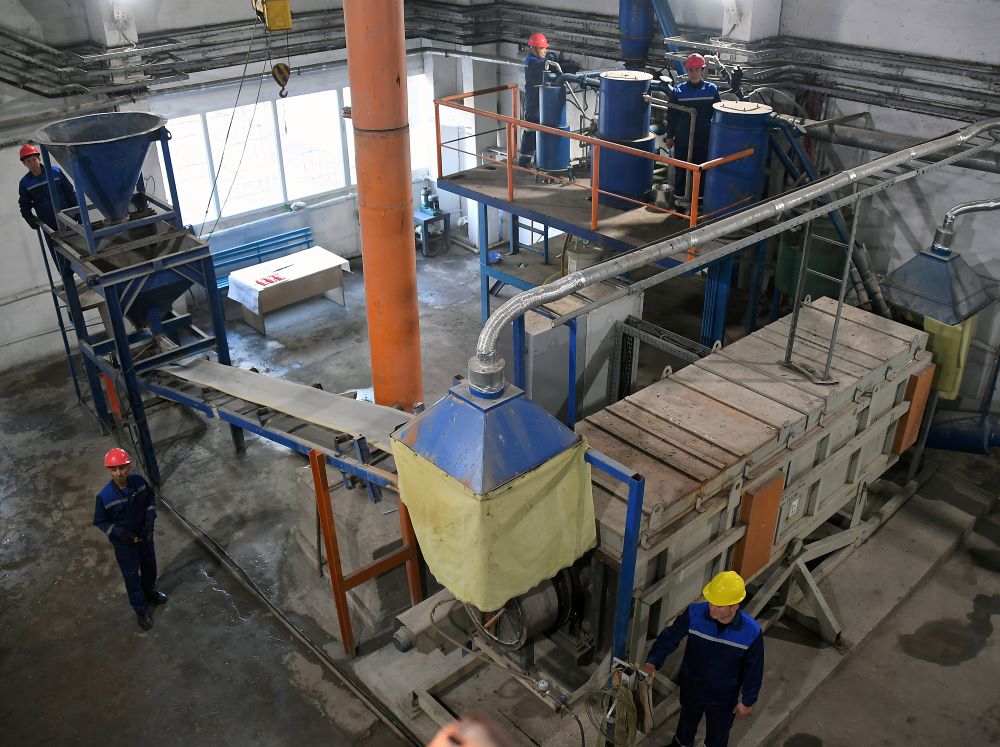
It was this group of specialists led by Yuri Sukharnikov who designed the original exclusive equipment – a pyrolysis furnace with an electric heater. In it, the rice husk is heated to + 400-500 degrees, the resulting mass is cooled on another unit to a temperature of + 100 degrees. The output is a silicon-carbon nanocomposite. Experts call these products a revolutionary material with a number of useful properties. The first batches received at the pilot plant in 2012 were successfully tested at poultry farms, poultry farms, as well as at the rubber products plant in Taraz.
Studies have shown that the use of silica carbon as a feed additive has a positive effect on productivity in poultry farming. Thus, the introduction of only 2% of this material into poultry feed significantly increases the safety of livestock and reduces egg slaughter. This conclusion was given by the KazNII of Animal Husbandry and Feed Production.
The same product as a filler increases the strength of automobile tires, reduces their cost. In addition, silicon carbon nanocomposite is widely known as a good sorbent, as well as a source for the production of silicon and ferroalloys.
– We plan to launch industrial production in September, – said Yuri Ivanovich. – The processing capacity of raw materials will be up to four thousand tons of rice husks per year, from which we will annually receive up to one and a half thousand tons of silica carbon. According to our data, the domestic poultry industry requires approximately 20,000 tons per year of feed additives. At first, we will be able to provide only five percent of this demand.
High purity product
The main volume of rice husks is planned to be supplied to the production base from the Kyzylorda region, where the largest rice-growing enterprises of the republic are located. About 5 thousand tons of raw materials are produced annually in the Balkhash district of the Almaty region. 300 tons of rice waste have already been delivered from Bakanas. The purchase and transportation of one ton costs scientists 35 thousand tenge.
– Rice farmers, even though they throw husks into the steppe, but then, as soon as they found out that someone needed it, they immediately started haggling, stuffing the price, - Yuri Ivanovich laughs. – I read that in America there is also a problem with the disposal of rice husks. So there, it turns out, they pay an additional five dollars per ton to those who take it from rice processing plants.
Sanzhar Dzhusupov showed us a fully automated technological process. The scientists decided to allocate the first ton of silicocarbon obtained after the launch of production to large poultry farms of the republic for free for new tests in order to once again convince poultry farmers of the benefits of these products.
– Silica carbon has already been added to the diet of chickens, geese, ducks, tested for toxicity, – says Sanzhar Arunovich. – No harmful substances were found, because the basis of this product is vegetable raw materials. Once, major universities in the United States concluded that broiler and chicken meat is harmful because birds are injected with chemicals to gain weight and reduce production costs. So, the highlight and originality of silica carbon is that it is a sorbent that removes harmful substances from poultry meat. And this is a matter of public health.
Over the past three years, the Science Foundation of the Republic of Kazakhstan has allocated an irrevocable state grant of 350 million tenge for the implementation of this project. The co-financing in the amount of 60 million tenge was undertaken by the Center for Complex Processing of Mineral Raw Materials, whose representatives are confident in the success of the know-how and profit. According to their calculations, the payback period of the project is three years, the profitability is about 100%. The Taraz rubber products plant alone expressed its willingness to purchase up to 1,500 tons of silicocarbon annually.
In general, the scientists' future plans include expanding production, manufacturing pyrolysis furnaces, aggregates and other equipment to increase production volumes. The technology is ready for commercialization, and there is interest in buying it not only in our country, but also abroad.
"Once, I sent about a ton of silicocarbon obtained at a pilot plant to the Karaganda Chemical and Metallurgical Institute," Sanzhar Dzhusupov recalled. – There, high-purity silicon was obtained from it, suitable for use in solar panels.
The authors of the idea also intend to launch the production of an organic product from rice husks, experimental batches of which have already been tested by KazNAU scientists on wheat, rye, rice, corn, and other agricultural crops. According to the research results, organic matter has proven to be an excellent plant growth stimulator. To launch industrial production, it is necessary to allocate a state grant.
Asset Kalymov
Source: kazpravda.kz
Other news
ПРОТОКОЛ заседания конкурсной комиссии

День металлурга в Национальном Центре по комплексной переработке минерального сырья Республики Казахстан
Materials on the submission for the assignment of the academic title of associate professor: Alimzhanova A.M.
Казахстанские ученые представили разработки в области полупроводниковых материалов на международной конференции RCCT-2026