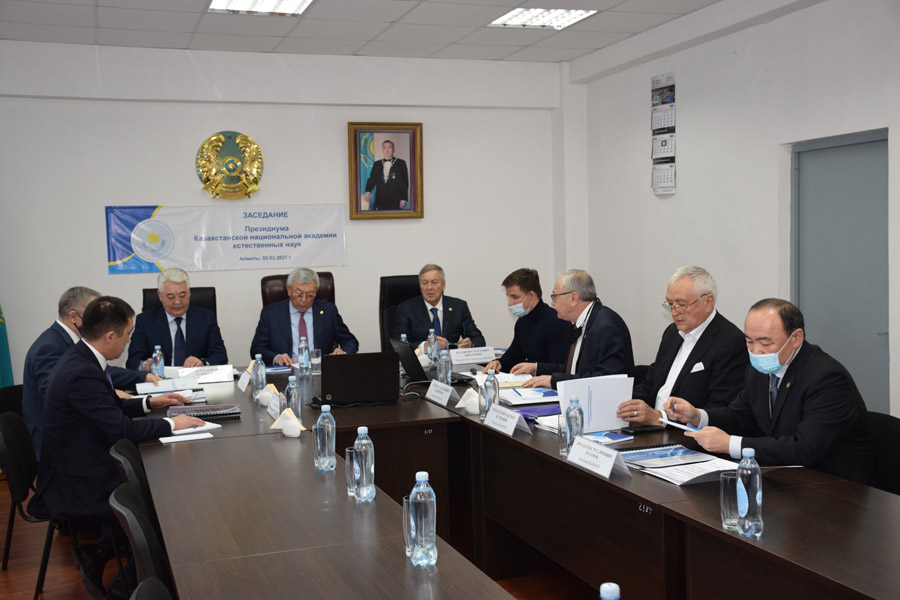
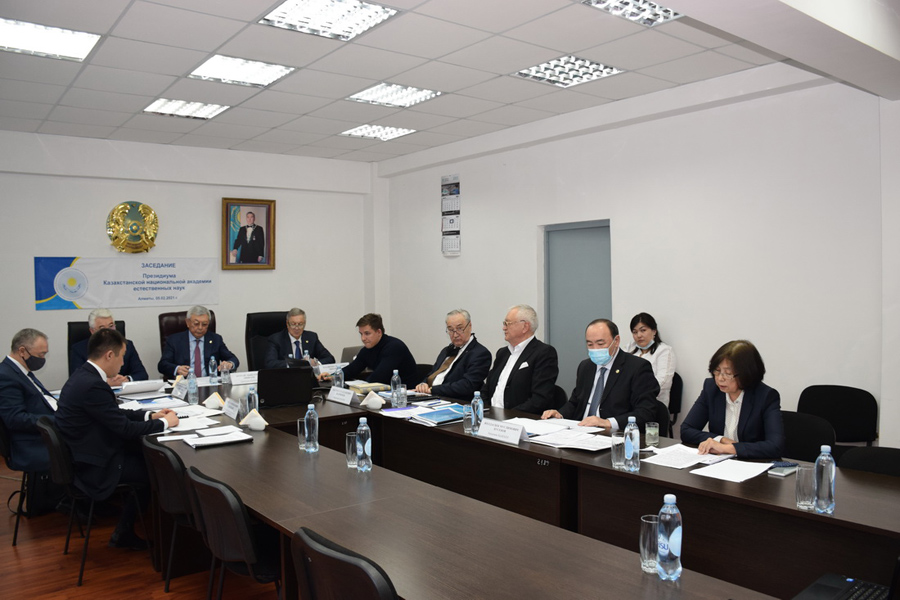

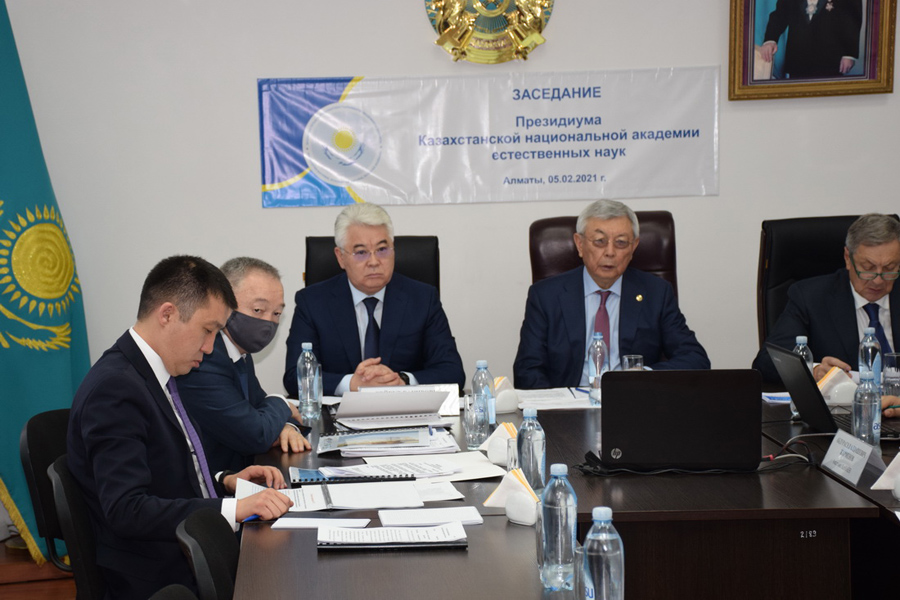
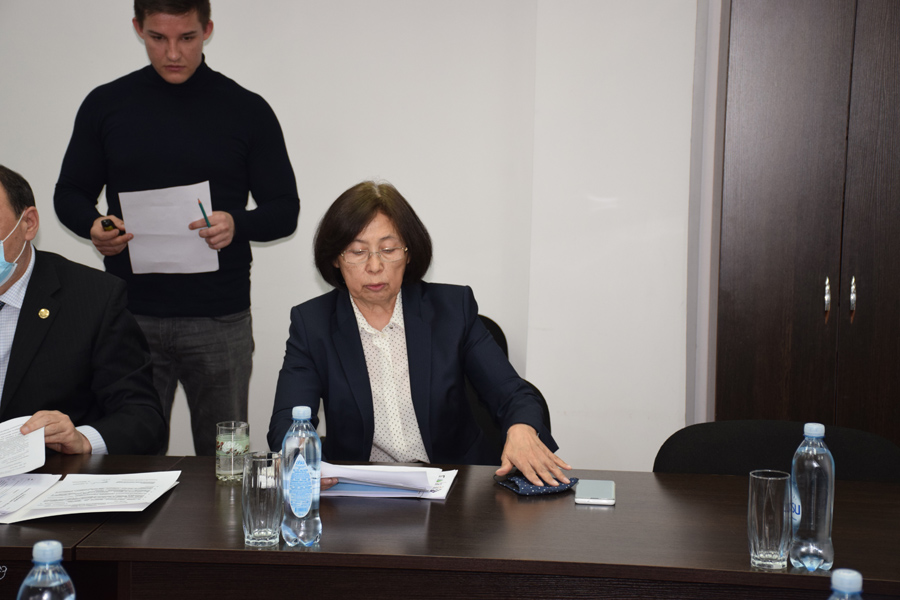
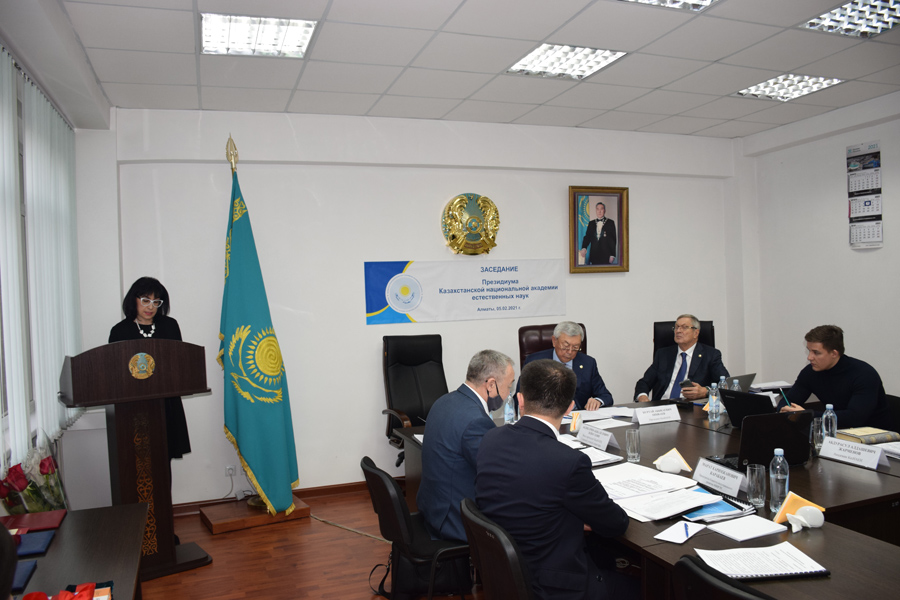

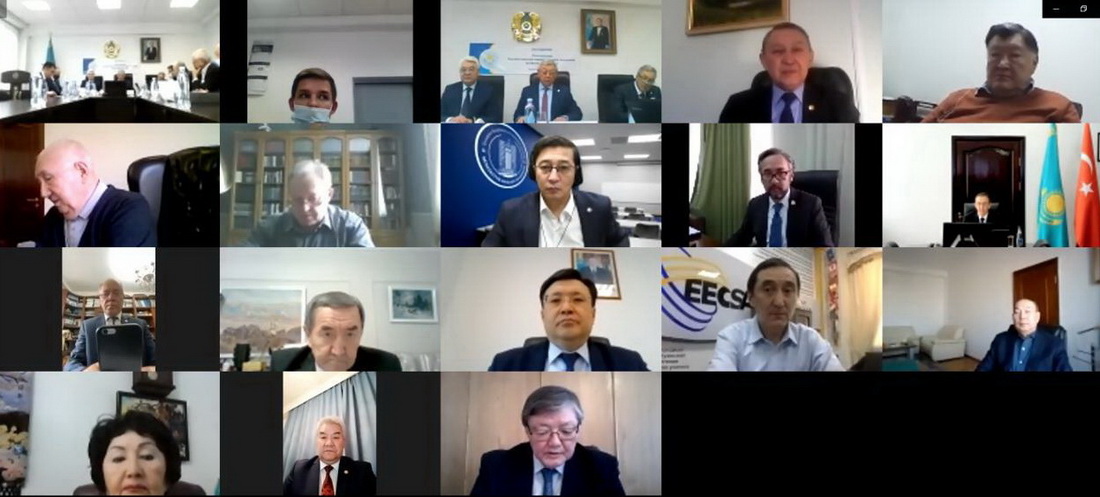
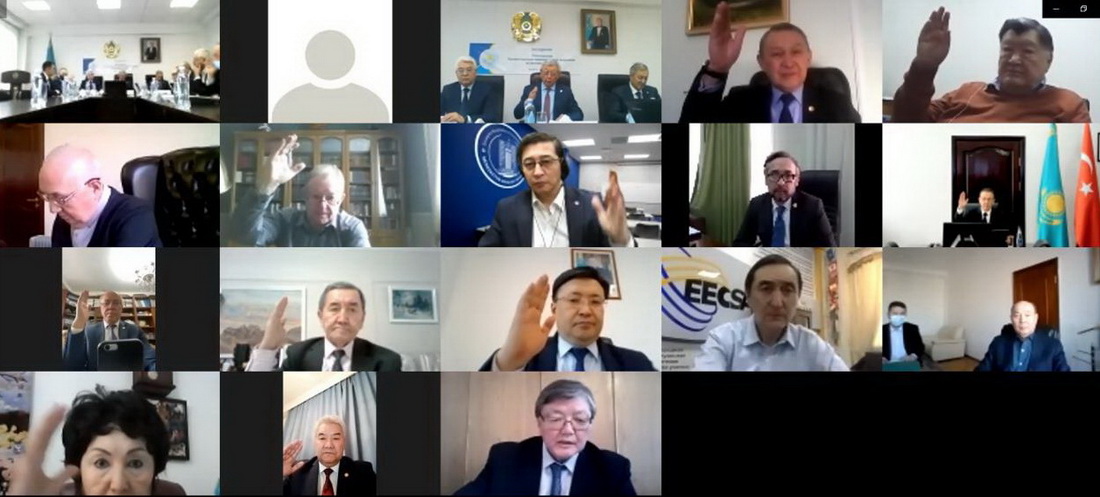
On February 5, 2021, an offline/online meeting of the Presidium of the National Academy of Natural Sciences of Kazakhstan (KazNRTU) was held at the National Center for Complex Processing of Mineral Raw Materials of the Republic of Kazakhstan. The meeting was chaired by the President of KazNRTU, N. A. Abykayev. The meeting was attended by the Minister of Industry and Infrastructure Development of the Republic of Kazakhstan, Beibut Bakyrovich Atamkulov, and the Chairman of the Committee for Industrial Development of the Republic of Kazakhstan, Marat Karimzhanovich Karabayev.
The National Center for Complex Processing of Mineral Raw Materials of the Republic of Kazakhstan presented the program "Fundamentally New Technologies for Processing Complex Polymetallic Raw Materials". In support of this program, Minister Beibut Bakyrovich Atamkulov noted:
"At the moment, the ministry oversees a wide range of activities: industry, construction, housing and communal services, roads, transport—from civil aviation to rail and road, including passenger transportation—defense industry, subsoil use, and shipping. Despite the coronavirus pandemic, results in 2020 were significantly better than expected. Manufacturing industry growth exceeded 3%, one of the highest rates not only in the CIS but also compared to European countries. Domestic industry provided general taxes exceeding those from agriculture, transport, trade, and services."
"From 2010 to 2020, 1,510 enterprises were built in Kazakhstan as part of the industrialization course initiated by Elbasy N. A. Nazarbayev. In 2020, 201 projects were launched with investments totaling 998 billion tenge, although many enterprises in services and transportation stopped working. The oil industry faced a difficult period, with oil prices falling to $30 per barrel, causing significant budget revenue losses. During that time, all metallurgical enterprises continued working. Mechanical engineering grew by 57% compared to the traditional 12%, light industry by 16%, pharmaceuticals by 47%, and significant progress was achieved in woodworking. Overall, import substitution increased across sectors."
"Today, we discussed metallurgy, which is closely linked to geology and subsoil use. We inherited a strong metallurgical complex; however, in the 1990s, most mechanical engineering enterprises and 50 defense industry enterprises were lost. Kazakhstan possesses unique mineral raw material reserves. Yet, as noted by the First Deputy General Director of RGP 'KMG', A. Zh. Terlikbaeva, only 35% of the explored fund is currently utilized. This is due to various factors, including the loss of data—some of which remained in USSR archives—and changes in the quality of raw materials, which require modern processing technologies."
"We are guided by the legacy of K. I. Satpayev and the discoveries of Soviet geologists. These must be further developed. The new Ministry of Ecology, Geology, and Natural Resources is addressing these issues by coordinating different ministries, although organizational challenges remain. At present, the mining and metallurgical complex (MMC) demonstrates clear investment dynamics, being the main customer for geology and investors. Last year, over 800 licenses were issued. What do we need today? In addition to standard technologies, we need new technologies for processing mineral raw materials. Subsoil users must transfer 1% to research and development (R&D). The system is liberalized to avoid additional taxes. As a result, subsoil users report that 1% is allocated to scientific research; however, funds remain insufficient. Last year, the total amounted to 16 billion tenge."
"My personal goal as minister is to ensure that this 1% remains in Kazakhstan. We cannot control foreign activities, such as whether research was conducted or new technologies were obtained. Since Kazakhstan joined the WTO last year, we are subject to WTO rules and also have obligations to the EAEU. Therefore, foreign services, goods, and equipment may now participate, provided that Kazakhstan’s share does not exceed 50%. The Committee for Industrial Development has been instructed to ensure that every tenge from subsoil users for scientific research stays in Kazakhstan and reaches domestic research centers. The ministry operates in metallurgy, enrichment, and chemistry, and each area has its own challenges. I am ready to cooperate with all scientists to solve these problems. Our goal is for the 1% to reach Kazakhstani scientists."
"On behalf of the head of state, the initiative for the Law of the Republic of Kazakhstan 'On Industrial Policy' was introduced, which clearly defines R&D and scientific developments. Previously, innovation and R&D were fully managed by our ministry. Now, functions have been separated: some transferred to the Ministry of Digital Development, Innovation, and Aerospace Industry; some to Baiterek NH and venture capital funds; some remained with the Ministry of Education and Science. As a result, innovation, technology, and R&D were scattered, though they should be close to production. The main sources of funding are production sectors: mechanical engineering, chemical and pharmaceutical industry, metallurgy, and defense and industrial complex."
"Today, according to the CPC, we also need to address rocket construction and rocket fuel. Chemists are required to work with explosives and specialized laboratories. Engine laboratories are needed. Pharmaceuticals have been normalized: last year, 22 different anti-COVID drugs were produced, and overall drug production increased tenfold. However, the Ministry of Health is trying to control pharmaceuticals, while we continue significant research in this area, and we resist."
"I would like to thank President N. A. Abykayev of the National Academy of Natural Sciences of Kazakhstan for providing the opportunity to engage in dialogue with scientists and the scientific community. Along with program-targeted financing, investment in scientific research and technology transfer is planned. At present, we lack administrative tools to voluntarily allocate the 1% in any direction. I warn scientists that old approaches are no longer effective; classical technologies cannot solve today’s challenges. New technologies are required. For example, in Shalkia, scientists have developed a fundamentally new and effective method for extracting lead and copper from complex raw materials containing high silicon dioxide, while by-products are easily processed by conventional methods. Similarly, in nuclear energy, Kazakhstani technology is now considered the cheapest, most effective, and best."
"We are rich today, yet as a minister, I cannot focus on every sector individually. We must establish a solid technological base and provide new technologies for copper, zinc, and lead industries. Traditional metallurgical enterprises should continue to operate. Furthermore, most of these metals are contained in the waste products of the phosphoric industry. It is necessary to create a catalog of metals and technologies to plan future development, especially as we advance in electronics and the semiconductor industry."
"At present, a new Environmental Code of the Republic of Kazakhstan has been adopted, which is very strict and requires new factories to be built based on modern technologies. I am concerned about the fate of traditional industries, such as ArcelorMittal Temirtau, which operate with outdated technology. Some may have to close. Therefore, the floor is for scientists," concluded Minister B. B. Atamkulov.
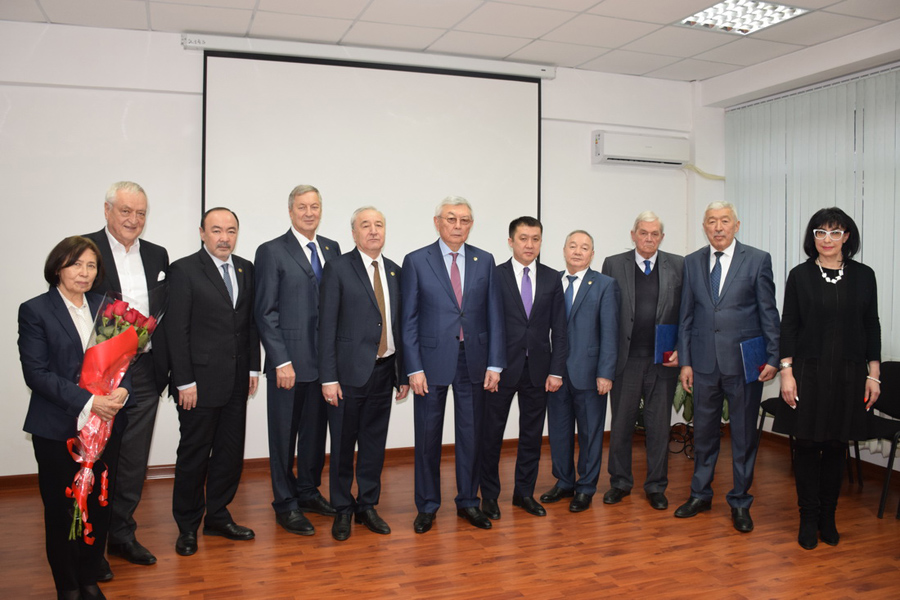
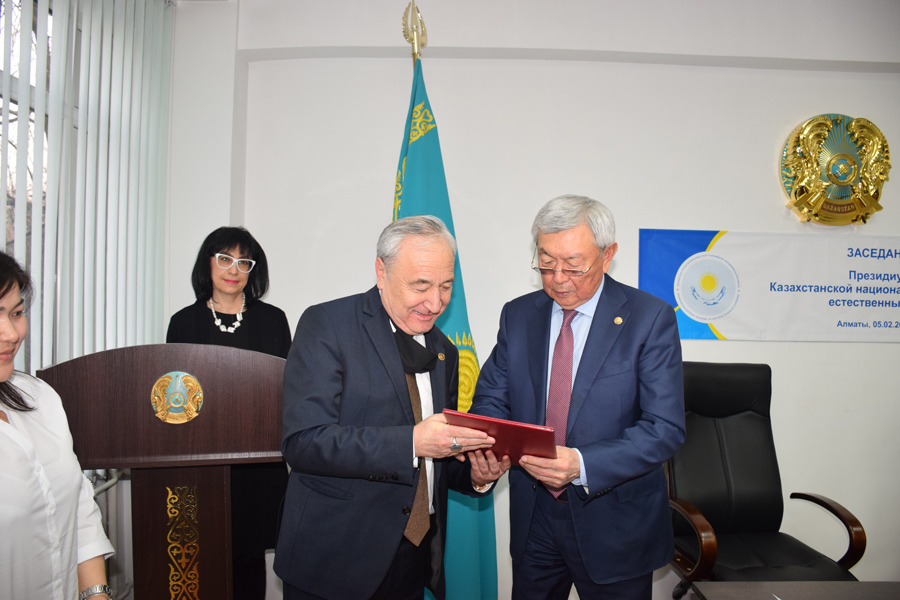
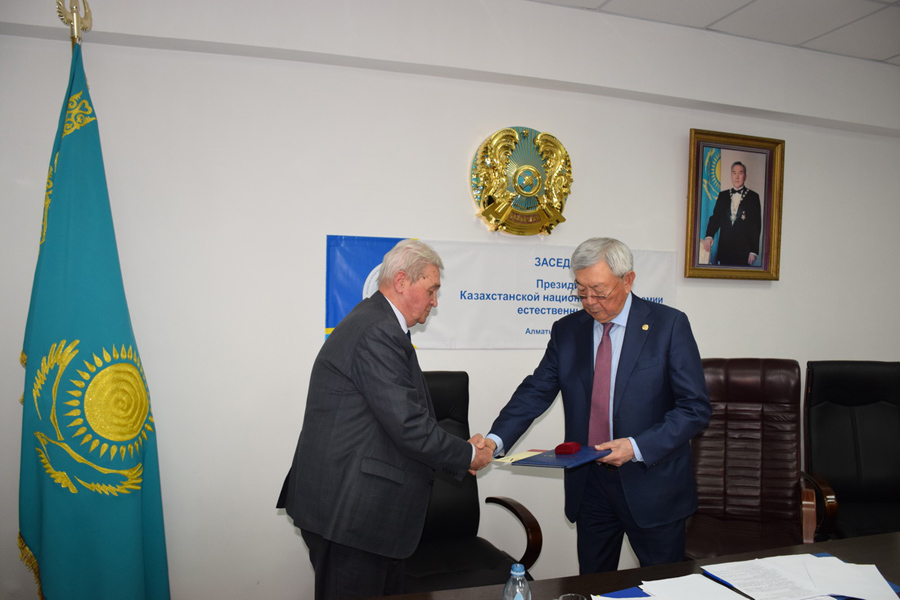
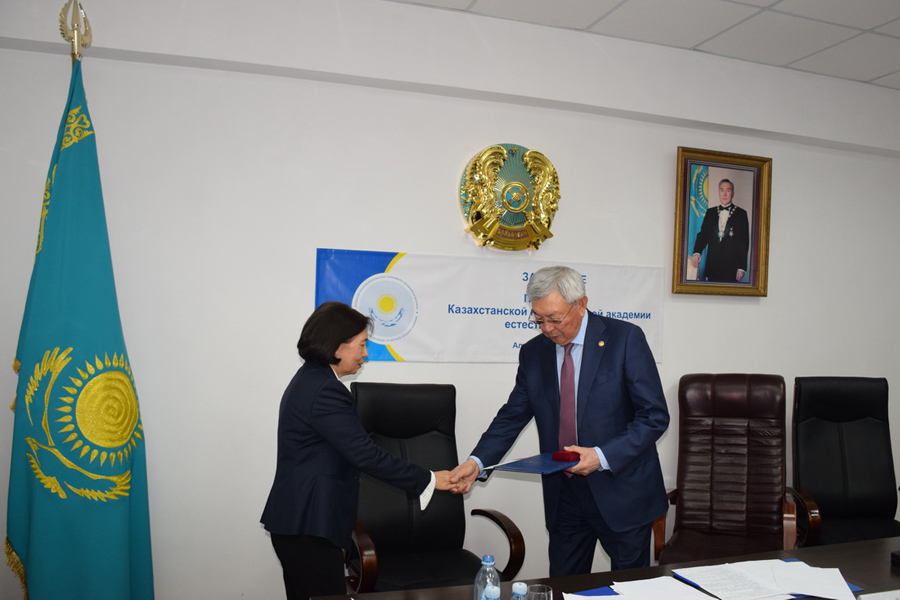
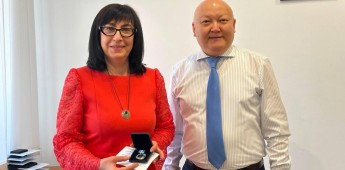
Within the framework of the Presidium meeting of KazNRTU, the authors of the study "Phenomenon of Accelerating the Formation of Iron Silicites during the Interaction of Silicon Oxide with Coal and Iron" were awarded. This study was recognized as a scientific discovery by the International Academy of Authors of Scientific Discoveries and Inventions at the Russian Academy of Natural Sciences (RAEN). Zharmenov Abdurasul Aldashevich from the National Center for Complex Processing of Mineral Raw Materials of the Republic of Kazakhstan was awarded the Diploma of the Author of the Discovery and the Gold Medal named after Petr Kapitsa. Aitkulov Dosmurat Kyzylbievich and Terlikbaeva Alma Zholdasovna received the Diploma of the Author of the Discovery and the Silver Medal named after Petr Kapitsa. Professor Shevko Viktor Mikhailovich from South Kazakhstan University named after M. Auezov was also awarded the Diploma of the Author of the Discovery and the Gold Medal named after Petr Kapitsa.
The National Center for Complex Processing of Mineral Raw Materials of the Republic of Kazakhstan, represented by General Director Zharmenov Abdurasul Aldashevich, received a certificate as the organization for which this discovery was approved.
Awards were presented to the authors by the President of KazNRTU, N. A. Abykayev, in coordination with the leadership of RAEN.
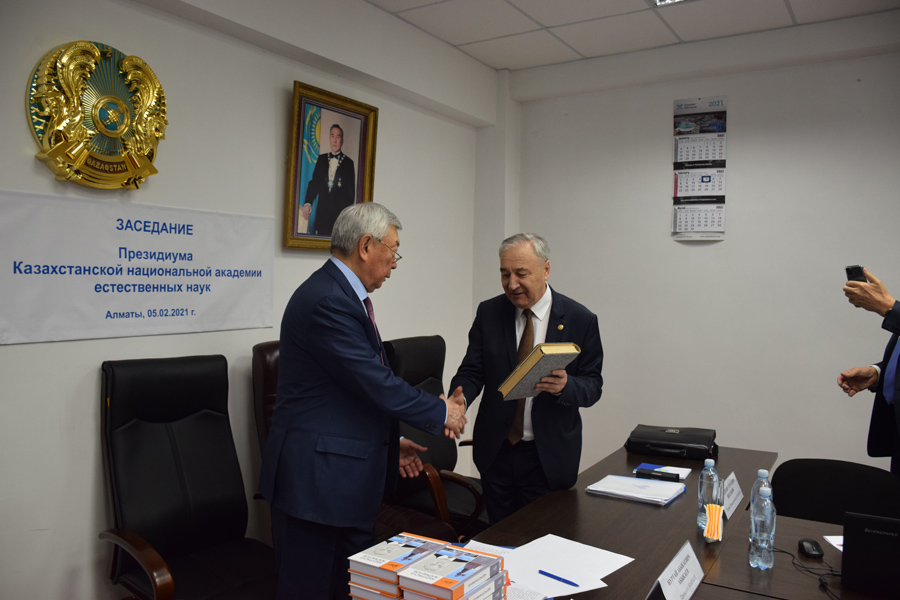
At the end of the Presidium meeting, a presentation of the book "Abdurasul Zharmenov" in the series "Onegeli Omir" was held. Since 2010, the series "Onegeli Omir", initiated by Al-Farabi Kazakh National University, has published books dedicated to the life and work of prominent state, public, and scientific figures. The Republican Public Editorial Board for the production of the series is headed by Olzhas Omarovich Suleimenov.
By the decision of the Editorial and Creative Council of Al-Farabi KazNU, the 208th issue of the series is dedicated to the 65th anniversary of the General Director of the National Center for Complex Processing of Mineral Raw Materials of the Republic of Kazakhstan, Doctor of Technical Sciences, Professor, Academician, and twice laureate of the State Prize of the Republic of Kazakhstan, Abdurasul Aldashevich Zharmenov.
The book "Abdurasul Zharmenov" contains 389 pages of text and 40 pages of photographs, reflecting the most important events of the jubilee celebrant's life. Its structure includes several sections, beginning with an introductory speech by the editor-in-chief, followed by a biography of Academician Zharmenov using official data from the National Encyclopedia of Kazakhstan (2005), and a brief overview of his scientific, pedagogical, and social activities.
An important section, "Archival Materials", includes documents that chronologically trace the formation of the scientist. Readers are presented with candidate and doctoral diplomas, certificates of senior researcher and professor, and certificates of full membership in international and Kazakhstani academies, including the National Academy of Natural Sciences of Kazakhstan, headed by President Nurtai Abykayevich Abykayev. The section also contains diplomas and certificates of the laureate of the prize named after Academician E. A. Buketov in the field of metallurgy and engineering, the U. A. Joldasbekov Prize and Gold Medal, and the first President of the Republic of Kazakhstan N. A. Nazarbayev Prize for Contribution to Science. These were signed by the President of AMR RK – Ginayat Bekzhanov, NIA RK – Bakytzhan Tursynovich Zhumagulov, and KazNTRU – N. A. Abykayev. Other awards include the Tarlan Independent Prize, the State Prize of the Republic of Kazakhstan in Science and Technology (2001 and 2015), Jubilee Medals ("10 Years of Astana", "20 Years of Independence of the Republic of Kazakhstan", "25 Years of Independence of the Republic of Kazakhstan"), the Order of Kurmet, and the Certificate of Honorary Citizen of the city of Turkestan, among many other documents.
The section "Congratulations" contains texts of official congratulations from the presidiums of national academies and foreign colleagues on the occasion of Abdurasul Aldashevich Zharmenov's 60th anniversary.
The section "Selected Works" includes bibliographic data, annotations of monographs and articles, and publications in journals included in high-quartile indices in the Web of Science and Scopus databases, showcasing the full scope of the academic’s world-class scientific research and achievements.
The section "By Pages in Print" contains media publications, popular science articles, interviews with A. A. Zharmenov, and narrative pieces about his life. It also includes his congratulations to participants of Astana Mining and Metallurgy events, the XIII World Ferro-Mining Congress "INFACON", the World Mining Congress, and others.
The photo album section presents the public life of Abdurasul Zharmenov and his life "outside the frame". Photos depict him as a child, student, young researcher, established scientist, laureate of the State Prize of the Republic of Kazakhstan, science organizer, innovator, friend, spouse, head of the family, loving father and grandfather, fully revealing his personality.
Memorable notes about him, such as "natural talent," "extraordinary and rare personality," "iron character, care, and conscience," and "scientist and citizen loyal to his country," complement the photographs, forming a coherent image of A. A. Zharmenov as a scientist, public figure, and human being.
The book concludes with a "Chronological Index of Main Works", which includes monographs, scientific publications, lists of USSR copyright certificates, and a compilation of the key dates in the life and work of Academician A. A. Zharmenov.
The book is intended for a wide readership. Its content not only traces the history of one individual but also reflects the development of the largest scientific enterprise in the field of mining and metallurgical complex (GMK) in Kazakhstan. The book will be of interest to the scientific community and serves as a valuable resource for educating young people in the spirit of patriotism and responsibility toward themselves, their people, and their country.
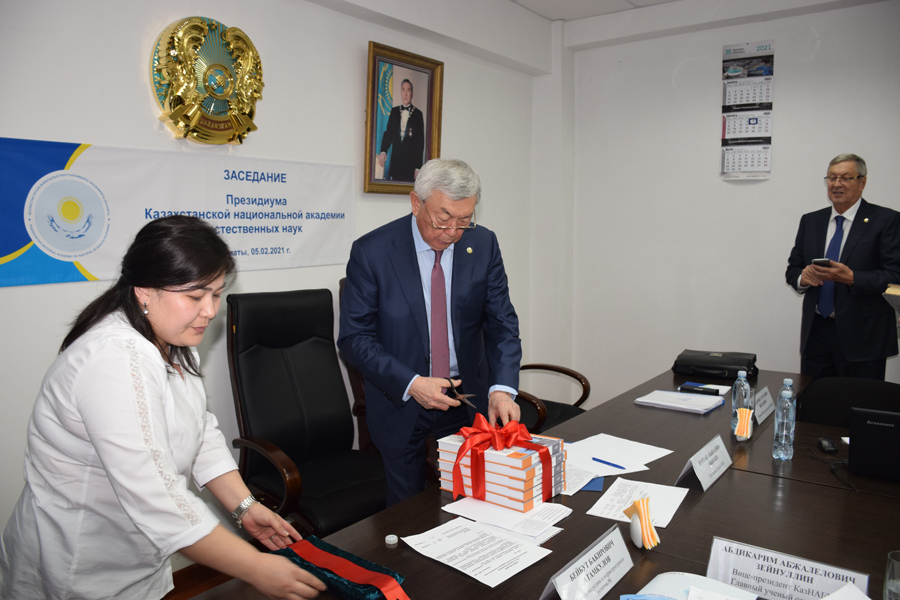
President of KazNRTU, N. A. Abykayev, held an official presentation ceremony of the book "Abdurasul Zharmenov", during which he cut the ribbon for the series and presented the book to the participants of the meeting.
Other news
ПРОТОКОЛ заседания конкурсной комиссии
День металлурга в Национальном Центре по комплексной переработке минерального сырья Республики Казахстан
Materials on the submission for the assignment of the academic title of associate professor: Alimzhanova A.M.
Казахстанские ученые представили разработки в области полупроводниковых материалов на международной конференции RCCT-2026